Greenlight Kids Card Honest Review — Does It Actually Teach Money Sense?

Products
Greenlight Core — Year-One Assessment
 Buy Now
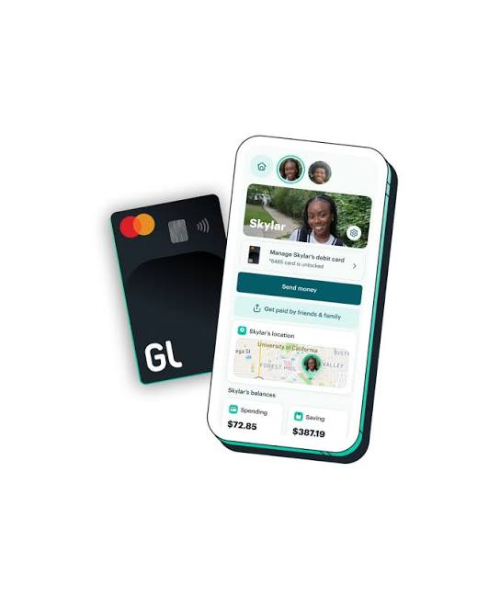
After a year on the Core plan, the features that proved most valuable and those that proved less essential than anticipated:
Most valuable: the real-time transaction notifications, which produced the specific conversation dynamic of knowing immediately when a purchase was made and being able to discuss it in context rather than in retrospect. The chore management system, which created the concrete earn-money-for-completing-work mechanism that pocket money alone doesn't have. And the savings goal feature, which allowed the child to see their progress toward a specific goal in a way that makes saving concrete rather than abstract.
Less essential than anticipated: the spending categories breakdown, which is useful but not frequently reviewed. The "give" allocation, which our household maintained but which didn't produce the charitable giving behaviour it's supposed to develop without more active parental engagement around the concept.
- Available at: Greenlight (greenlight.com)
- Best for: Families who will engage with the system actively — the platform that rewards parental engagement with genuinely better financial education outcomes
Greenlight and the Chore Conversation
 Buy Now
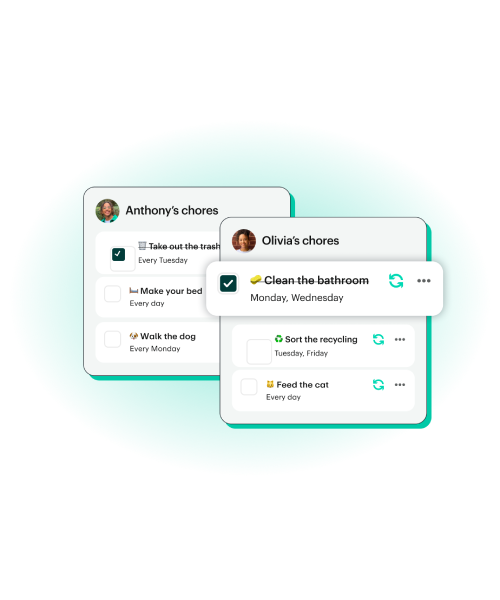
The chore system's year-one reality: chore completion improved in the first two months, settled to a higher baseline than before Greenlight but lower than the initial enthusiasm peak, and is now maintained through the combination of the financial consequence and the established expectation rather than the novelty alone. This is the honest outcome of most behavioural systems — the novelty produces the initial change and the system design maintains a portion of it.
The chore amounts matter more than most parents initially set them at. If the earn rate from chores produces too little money to make meaningful spending decisions, the connection between chores and money feels nominal. If it produces enough to make real choices — to save toward something wanted, to spend on something immediate — the financial education produces through the genuine decisions the amount enables.
- Available at: Greenlight (greenlight.com)
- Best for: Establishing the earn-to-spend connection — most valuable when the chore amounts are calibrated to produce meaningful spending decision opportunities
Greenlight Max — Investment Feature Assessment
 Buy Now
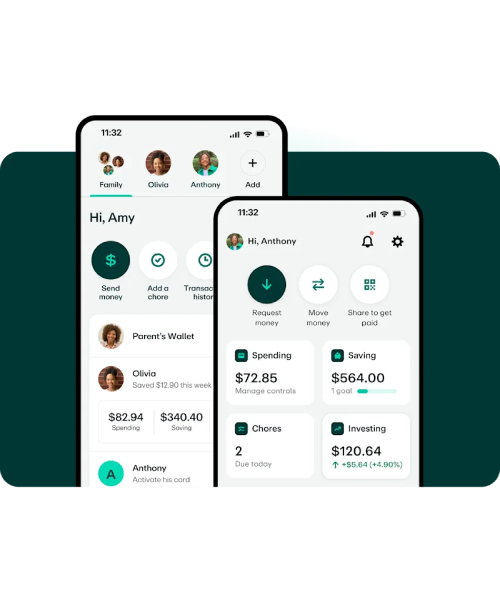
For households with older children who added the Max plan for the investment feature: the investment education that fractional share ownership produces is genuinely valuable when parents engage with it. The child who buys $10 of a company they know — a clothing brand, a technology company, a food brand — and tracks its value over months develops the beginning of genuine market understanding. The child whose parents set up the investment without engagement and the investment is forgotten doesn't benefit in the same way.
- Available at: Greenlight (greenlight.com)
- Best for: Families with older children (10+) who will actively engage with the investment concept — the feature that produces value through engagement rather than passive ownership
Greenlight vs Alternatives
The honest comparison with the primary alternatives: GoHenry in the UK operates on a similar model with comparable features at a slightly different price point; Revolut Junior uses the broader Revolut ecosystem with more sophisticated features at the cost of additional complexity; and the plain debit card with a separate allowance spreadsheet serves families who want the financial tools without the dedicated platform.
Greenlight's advantage over these alternatives: the app quality and reliability, the chore management integration, and the US-market support quality. The disadvantage: the monthly cost over time adds up, and families who don't engage actively with the platform are paying for features they're not using.
The Financial Education That Actually Happens
The financial understanding that a year of Greenlight produces in most children isn't comprehensive financial literacy — it's the foundation that financial literacy builds on. Specifically:
Money is finite. The child who has $30 in their Greenlight account understands that $25 spent on one thing means $5 available for everything else. This sounds obvious and isn't experientially obvious for children whose money has been a parental resource that appeared when needed rather than a finite personal resource.
Spending choices have consequences. The child who spends their allowance on something immediately and then can't afford the thing they wanted the following week has experienced the opportunity cost of a spending decision in a way that no financial lesson replicates.
Saving works. The child who saves toward a specific goal over multiple weeks and achieves it has experienced the specific satisfaction of deferred gratification that is one of the most robustly evidenced predictors of positive financial outcomes in adulthood.
These are the three foundation concepts. Everything else in financial education builds on them, and Greenlight's year-one outcome for most households is the concrete establishment of all three through genuine experience rather than instruction.
The Verdict
Greenlight after a year of use earns its continued subscription for households that engage actively with the system as a financial education platform rather than just a more sophisticated pocket money mechanism. The real-time transaction visibility, the chore-to-payment connection, and the savings goal tracking are the features that produce the most consistent financial education value. The investment feature adds genuine value for older children with engaged parents. And the honest limitation is the engagement requirement — the system rewards the parent who uses it as the conversation infrastructure it's designed to be, rather than the parent who sets it up and hopes it runs itself. At $5.99 per month, the financial education it provides when used actively is worth the cost. When used passively, it's a more expensive way to give pocket money.
Every product here was chosen by an editor from the public record — verified buyer reviews, independent testing and the brand’s own documentation — before any commercial conversation happened. If you buy through a link on this page we may earn a commission, at no cost to you, and it never decides what we recommend. Read the full policy.
Editorial Team
Every recommendation on Decor Imperial is researched by our editors from the public record — verified buyer reviews, independent testing, owner communities and the brand’s own documentation — before it appears here. We earn a commission when you buy through our links; no brand sees a review before it is published, and none has ever changed one.
Keep Reading
All stories Lifestyle
NordicTrack Review: iFIT Changes Everything, the Support Record Does Not
iFIT is the reason people who never stuck at running stick at it. Then there is the company behind the machine — a Better Business Bureau rating of 1.3 stars.
Lifestyle
Lifestyle
NordicTrack Review: iFIT Changes Everything, the Support Record Does Not
iFIT is the reason people who never stuck at running stick at it. Then there is the company behind the machine — a Better Business Bureau rating of 1.3 stars.
 Lifestyle
Minted Review: The Crowdsourced Design Platform With Genuine Artist Quality — And a Customer Service Decline Worth Knowing
Sixteen thousand independent artists and a community vote before anything gets printed — a genuine filter, not a marketplace. Proof your order: one batch arrived carrying another family's photographs.
Lifestyle
Lifestyle
Minted Review: The Crowdsourced Design Platform With Genuine Artist Quality — And a Customer Service Decline Worth Knowing
Sixteen thousand independent artists and a community vote before anything gets printed — a genuine filter, not a marketplace. Proof your order: one batch arrived carrying another family's photographs.
 Lifestyle
Hill House Home Honest Review — Is the Aesthetic Worth the Price?
The percale sheets are the Hill House Home product I'd recommend most confidently.
Lifestyle
Lifestyle
Hill House Home Honest Review — Is the Aesthetic Worth the Price?
The percale sheets are the Hill House Home product I'd recommend most confidently.