Best Wool Bedding Worth Buying — Why Natural Fiber Actually Changes How You Sleep
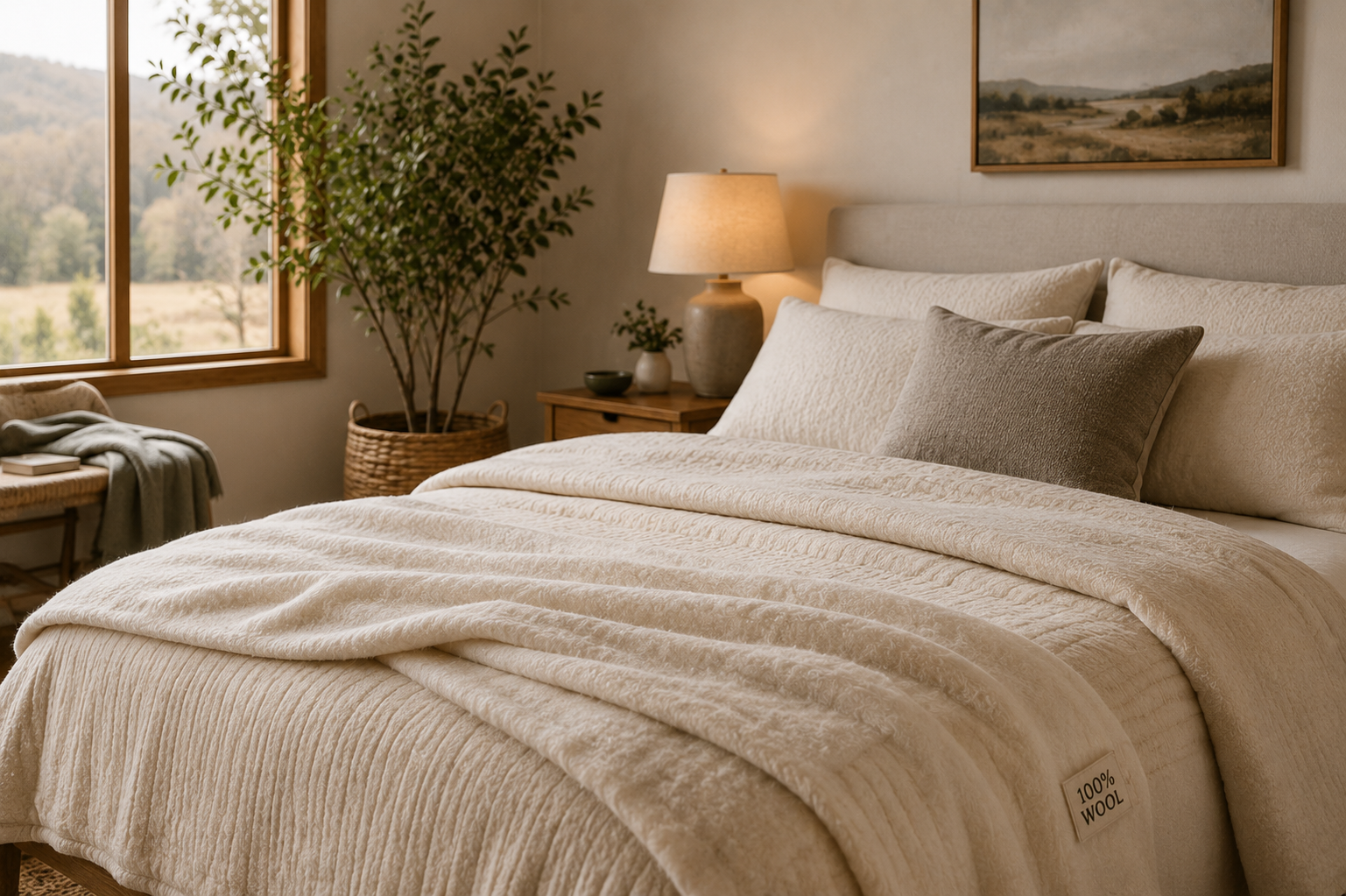
Most people's approach to bedding is pragmatic to the point of thoughtlessness — the duvet was bought because a duvet was needed, the sheets came with something else or were on sale, and the pillow is approximately the right shape. The result is a sleep environment that's functional and no more, which is a significant missed opportunity given that roughly a third of life is spent in it.
The bedding that genuinely changes sleep quality does so through one primary mechanism: temperature regulation. The specific disruption that most people experience — waking in the early hours too warm, then too cold, then unable to fall back into deep sleep — is predominantly a temperature regulation failure in the bedding system rather than a sleep disorder. Synthetic duvets trap heat in a way that natural fibers, and wool specifically, don't. The difference in sleep quality for someone who runs warm or who experiences night sweats is not subtle — it's the difference between waking once or twice per night and not waking at all.
Products
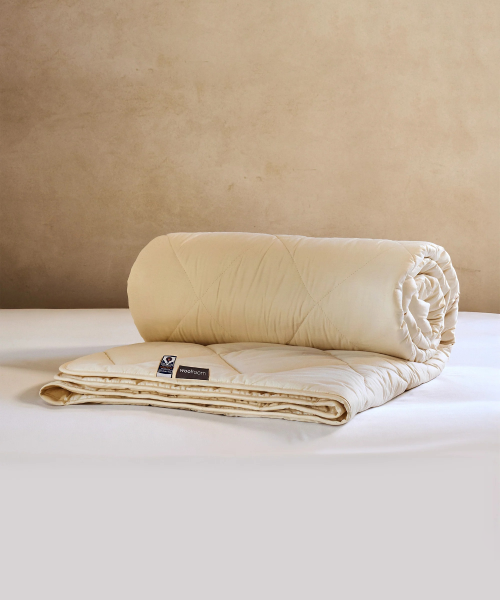
The Wool Room Deluxe British Wool Duvet
 Buy Now
The Wool Room uses British wool meeting the Woolmark quality standard in their Deluxe Duvet range, and the specific properties of this wool — the fibre structure that creates air pockets for insulation while allowing moisture to move through rather than accumulating — produce the temperature regulation effect that makes wool bedding genuinely different from synthetic alternatives. The duvet is available in 4.5 tog for summer, 9 tog for transitional seasons, and 13.5 tog for winter, with the all-seasons combination being the most practical option for most households — a 4.5 tog and 9 tog that combine into a 13.5 tog winter duvet and separate for other seasons.
- Price: $150–$280 / £120–£220 depending on tog and size
- Available at: The Wool Room (thewoolroom.com)
- Best for: Those who wake warm or experience night sweats — the duvet that actively manages sleep temperature rather than passively insulating
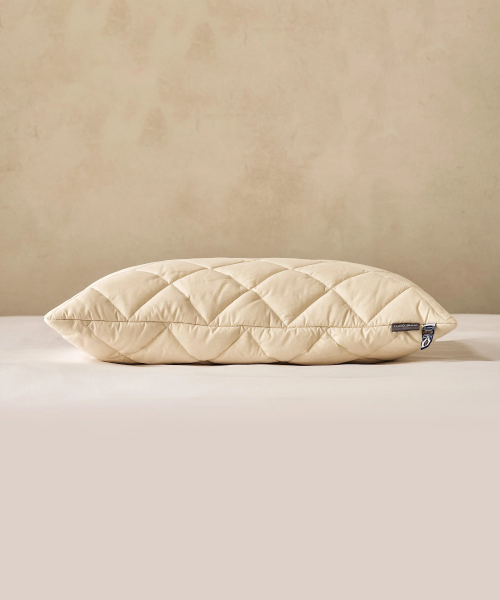
The Wool Room Natural Wool Pillow
 Buy Now
The temperature management properties of wool extend to the pillow, which matters specifically because the head and neck area is where temperature sensitivity is highest during sleep. The Wool Room's wool pillow provides medium-firm support in a fill that doesn't retain heat around the head in the way that memory foam and many synthetic fills do. For warm sleepers who find their pillow consistently warm through the night, the wool alternative produces a noticeably different experience.
- Price: $45–$65 / £38–£55
- Available at: The Wool Room (thewoolroom.com)
- Best for: Warm sleepers who find their pillow retains heat through the night — the natural alternative that doesn't trap heat around the head
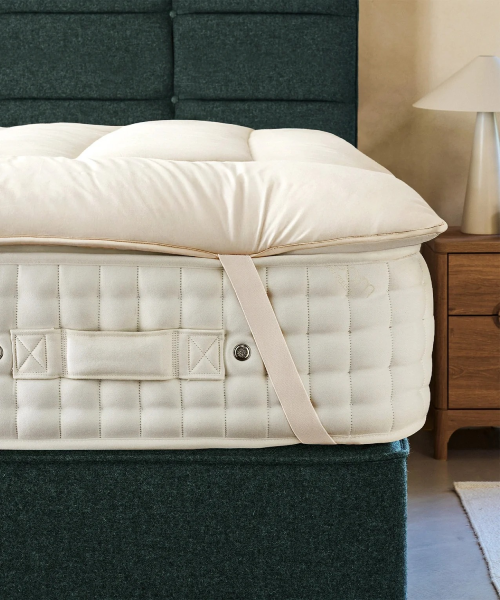
The Wool Room Organic Wool Mattress Topper
 Buy Now
The Wool Room's mattress topper extends the wool temperature regulation to the surface below the sleeper as well as above. The mattress topper is specifically useful for those whose mattress surface retains heat — memory foam and certain synthetic mattress constructions are warm in a way that the wool topper above addresses without requiring mattress replacement. The organic wool certification adds to the material quality narrative for those for whom organic certification matters.
- Price: £150–£280 depending on size
- Available at: The Wool Room (thewoolroom.com)
- Best for: Those whose primary sleep temperature issue is heat retention from the mattress below — the topper that addresses the heat source at the sleep surface
The Science Behind Wool's Temperature Management
The temperature regulation story for wool is not marketing language — it's fibre science with a straightforward mechanism.
Wool fibres have a crimped, helical structure that creates millions of tiny air pockets within the duvet fill. These air pockets trap warm air for insulation — which is what any fill material does. The distinctive property of wool is what happens next: the fibre can absorb up to 30% of its weight in moisture without feeling damp, and it releases that moisture gradually as temperature changes.
In practical sleep terms: when the body temperature rises during sleep, the increase in skin moisture and heat is absorbed by the wool fibres and then released into the room environment as the fibre cools — rather than accumulating against the skin surface in the way that synthetic fill allows. The result is a sleep surface that maintains a more consistent temperature despite the body's natural temperature variations rather than one that simply reflects them back.
This is why wool bedding specifically helps warm sleepers and those with night sweats while also providing adequate warmth in colder conditions — it's responsive rather than passive, which is the fundamental difference between natural and synthetic fill performance.
The Longevity Case
Beyond the temperature management performance, wool bedding has a longevity argument that synthetic alternatives don't.
A well-cared-for wool duvet lasts fifteen to twenty years. This is the actual lifespan of a quality wool bedding product with appropriate care — the wool fibres don't degrade in the way that synthetic fill breaks down and loses its loft and insulating properties over time. A synthetic duvet at the same price point typically needs replacing every three to five years as the fill loses its loft.
The longevity argument changes the economics. A £200 wool duvet that lasts fifteen years costs £13 per year. A £80 synthetic duvet that lasts four years costs £20 per year. The wool is cheaper over the product's lifetime while performing better throughout.
The care required: not frequent washing. The natural lanolin in wool has antimicrobial properties that reduce the bacterial accumulation that necessitates frequent washing of synthetic alternatives. Airing the duvet outdoors on dry days a few times per year is the primary maintenance. Full washing once every one to two years following the manufacturer's specific instructions maintains quality without the more frequent washing that synthetic alternatives require.
Hill House Home Sheets — The Complementary Investment
Hill House Home produces the nightgown collection that's become culturally significant, and their bed linen range applies the same aesthetic quality to the sheets that complement natural fiber duvets. The Signature Sateen and the Percale options offer the two primary cotton weave choices — the sateen for those who want a silkier, slightly heavier feel, and the percale for those who prioritize breathability and the characteristic crisp quality that percale develops.
Hill House Home sheets alongside The Wool Room or Duckworth duvet constitute a complete natural fiber sleep system that addresses both the temperature regulation above and the breathability below — the combination that most consistently produces the improved sleep quality that each element partially delivers.
Conclusion
Wool bedding from The Wool Room and Duckworth is the sleep investment that produces genuinely measurable improvement for a specific population — warm sleepers, those who experience night sweats, and anyone who has found synthetic duvets consistently unsatisfying without being able to identify why. The temperature management is real, the longevity is demonstrably better than synthetic alternatives, and the economics over the product's lifetime justify the higher upfront cost. The Wool Room's all-seasons combination is the most practical starting point. Duckworth is the choice for American buyers who want domestic sourcing and fine-staple softness. Start with the duvet and assess the improvement before adding the pillow and mattress topper — the duvet alone is typically sufficient to determine whether wool bedding produces the sleep quality improvement it promises.
Every product here was chosen by an editor from the public record — verified buyer reviews, independent testing and the brand’s own documentation — before any commercial conversation happened. If you buy through a link on this page we may earn a commission, at no cost to you, and it never decides what we recommend. Read the full policy.
Editorial Team
Every recommendation on Decor Imperial is researched by our editors from the public record — verified buyer reviews, independent testing, owner communities and the brand’s own documentation — before it appears here. We earn a commission when you buy through our links; no brand sees a review before it is published, and none has ever changed one.
Keep Reading
All stories Home & Decors
Reasn Review: Is This Size-Inclusive Fashion Brand Worth It?
Home & Decors
Home & Decors
Reasn Review: Is This Size-Inclusive Fashion Brand Worth It?
 Home & Decors
Nathan James Furniture Review: Great Customer Service, Mixed Quality
Home & Decors
Home & Decors
Nathan James Furniture Review: Great Customer Service, Mixed Quality
 Home & Decors
McGee & Co Review: A Catalogue That Coheres, and Furniture That Does Not Arrive
The Studio McGee catalogue is built so that everything in it sits together, and on décor and textiles the buyers agree. Large furniture is the problem: a $6,000 bed unshipped at six months.
Home & Decors
Home & Decors
McGee & Co Review: A Catalogue That Coheres, and Furniture That Does Not Arrive
The Studio McGee catalogue is built so that everything in it sits together, and on décor and textiles the buyers agree. Large furniture is the problem: a $6,000 bed unshipped at six months.