Best Kitchen Products Worth Buying — The Upgrades That Change Daily Cooking

The kitchen is the home space where daily friction accumulates most visibly. The pan that requires three attempts to release eggs without sticking. The coffee that takes four minutes to produce from a machine that was bought because it looked impressive and performs inconsistently. The surfaces that are visually chaotic with things that don't have a proper place. These are the specific daily irritations that kitchen products either create or eliminate, and understanding which products do which is most of what makes a kitchen genuinely good to work in.
The kitchen upgrades worth making are not the dramatic renovation decisions — the new countertops, the replacement appliances, the layout change — though those have their place. They're the specific product decisions that address daily friction points and that produce the specific satisfaction of a kitchen that works smoothly rather than one that's tolerated.
Products
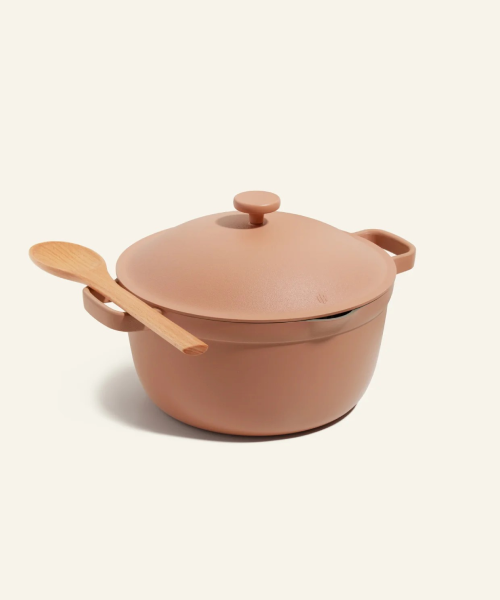
Our Place Perfect Pot
 Buy Now
The Perfect Pot is the kitchen product that addresses the most common cooking friction in one piece. The pasta that needs a colander. The soup that needs a ladle rest. The steaming vegetable that needs a separate steamer basket. The Perfect Pot integrates these functions — the straining lid, the steam basket, the spoon rest — into a single vessel that reduces both the equipment needed and the surface management required during cooking. In a colorway that looks right on a kitchen surface or a dining table, it also addresses the serving question that a dedicated pot doesn't.
- Price: $175 / £155
- Available at: Our Place (fromourplace.com)
- Best for: Those who cook pasta, soups, and vegetables regularly and want the cooking-to-serving process simplified — the pot that does more without requiring more equipment
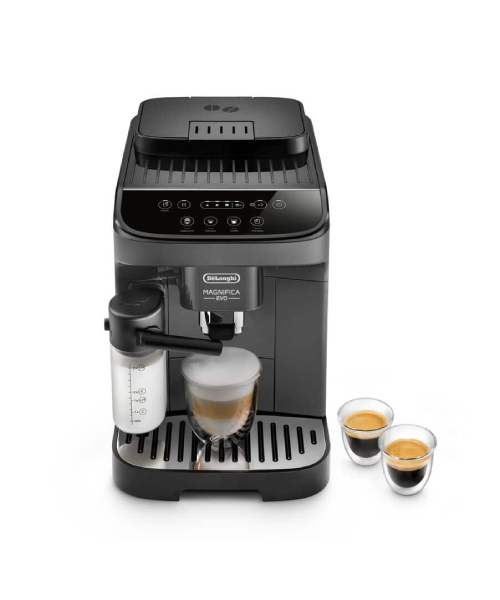
DeLonghi Magnifica Evo
 Buy Now
The DeLonghi Magnifica Evo earns a second appearance because the daily friction of home coffee production is high enough for regular coffee drinkers that the right machine makes a visible daily difference. The bean-to-cup automation produces genuinely good espresso with the same effort as pressing a button, which changes the morning kitchen experience from a preparation to a pleasure — the specific quality that makes a kitchen feel like somewhere worth spending time in the mornings.
- Price: £399–£499
- Available at: DeLonghi (delonghi.com), John Lewis, Currys, Amazon
- Best for: Daily espresso and coffee drinkers who want cafe-quality results without manual technique — the machine that changes the morning kitchen routine
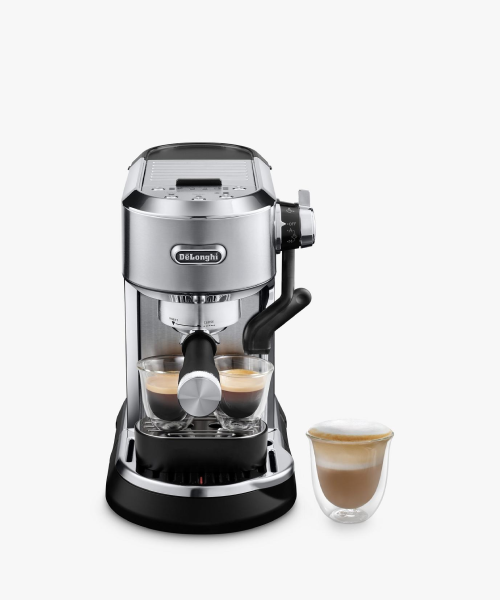
DeLonghi Dedica Arte for Coffee Ritual
 Buy Now
For those who want the process as well as the product — the morning ritual of grinding, tamping, and extracting rather than just the result — the Dedica Arte is the manual espresso machine that occupies the smallest counter footprint (15cm wide) while producing genuine espresso quality. It represents the kitchen upgrade for those whose morning coffee is a deliberate moment rather than a background need.
- Price: £149–£199
- Available at: DeLonghi (delonghi.com), John Lewis
- Best for: Those for whom the coffee-making process is part of the morning enjoyment — the manual machine that rewards technique in the smallest possible footprint
The Kitchen as a Designed Space
Most kitchens are designed from a functional perspective — the work triangle, the storage efficiency, the surface area. These are the right primary considerations. But the kitchen that functions well aesthetically as well as functionally — where the visible elements contribute to the visual quality of the space rather than just being present — produces a different daily experience.
The specific elements worth considering visually: the cookware that's displayed when not in use rather than hidden in cabinets. The coffee machine that's a considered object on the counter rather than an appliance that happened to be bought. The storage solutions that make visible surfaces clear rather than covered with random accumulation.
Our Place specifically designs their products with display in mind. The colorways — the warm terracotta, the sage, the spice, the heat map — are chosen to look right in kitchen environments. Displaying the Always Pan and the Perfect Pot on a hanging rail or visible on the hob treats the kitchen as a space where visual quality matters rather than one where everything is hidden away.
The Counter Space Question
Counter space is the scarcest kitchen resource in most homes, and the products that earn it are those that either serve a function frequent enough to justify permanent presence or look good enough that their visual contribution justifies the space they occupy.
The products that earn counter space based on daily use: the coffee machine for daily coffee drinkers, the toaster for daily toast makers, the kettle for daily tea and coffee. These are the products that would be fetched from a cabinet and returned so frequently that the cabinet access itself becomes a friction point.
The products that earn counter space based on visual contribution: the displayed cookware in quality colorways, the herbs in simple terracotta pots, the fruit bowl that's also a visual element. These aren't used daily but their presence contributes to the kitchen's visual quality in a way that justifies the space they occupy.
Everything else — the appliances used monthly, the gadgets that address niche needs, the equipment for cooking that happens occasionally — belongs in storage rather than on the counter. The ruthless assessment of which category each counter object belongs in produces the counter space that makes cooking easier and the kitchen look more considered.
Conclusion
Kitchen products worth buying are those that address genuine daily friction rather than aspirational cooking needs. The Our Place Perfect Pot simplifies the most frequent large-volume cooking situations. The DeLonghi Magnifica Evo eliminates the morning coffee friction for daily coffee drinkers. The Always Pan's integrated design reduces the secondary mess of everyday cooking. And the Dedica Arte provides the coffee ritual for those who want the process as much as the result. The kitchen that genuinely works well to cook in has products that address real daily needs — and the daily satisfaction of those products working correctly is felt every single time the kitchen is used.
Every product here was chosen by an editor from the public record — verified buyer reviews, independent testing and the brand’s own documentation — before any commercial conversation happened. If you buy through a link on this page we may earn a commission, at no cost to you, and it never decides what we recommend. Read the full policy.
Editorial Team
Every recommendation on Decor Imperial is researched by our editors from the public record — verified buyer reviews, independent testing, owner communities and the brand’s own documentation — before it appears here. We earn a commission when you buy through our links; no brand sees a review before it is published, and none has ever changed one.
Keep Reading
All stories Home & Decors
Reasn Review: Is This Size-Inclusive Fashion Brand Worth It?
Home & Decors
Home & Decors
Reasn Review: Is This Size-Inclusive Fashion Brand Worth It?
 Home & Decors
Nathan James Furniture Review: Great Customer Service, Mixed Quality
Home & Decors
Home & Decors
Nathan James Furniture Review: Great Customer Service, Mixed Quality
 Home & Decors
McGee & Co Review: A Catalogue That Coheres, and Furniture That Does Not Arrive
The Studio McGee catalogue is built so that everything in it sits together, and on décor and textiles the buyers agree. Large furniture is the problem: a $6,000 bed unshipped at six months.
Home & Decors
Home & Decors
McGee & Co Review: A Catalogue That Coheres, and Furniture That Does Not Arrive
The Studio McGee catalogue is built so that everything in it sits together, and on décor and textiles the buyers agree. Large furniture is the problem: a $6,000 bed unshipped at six months.