Best Coffee Machines Worth Buying — Great Coffee Without Leaving the House
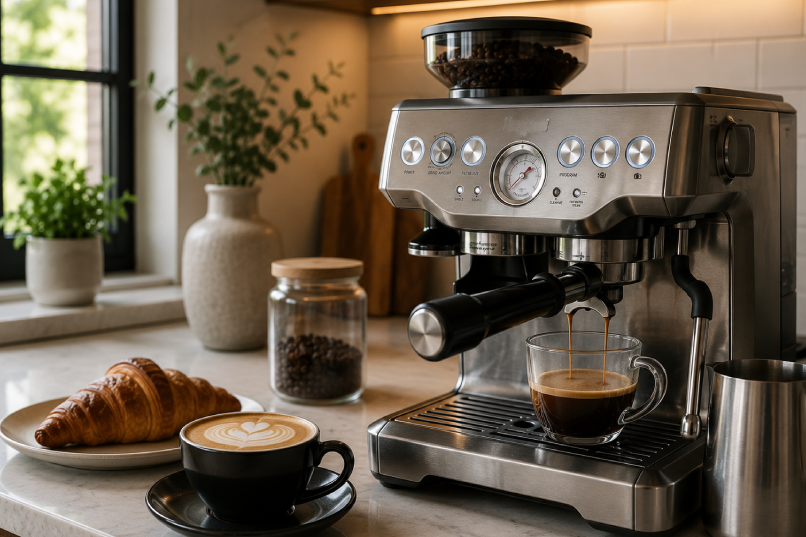
The home coffee machine market generates a significant amount of wishful thinking. The machine that will produce cafe-quality espresso with no learning curve. The bean-to-cup that will make barista-standard coffee at the press of a button. The cold brew system that will revolutionize summer mornings. Some of these promises are more accurate than others, and understanding which machines do what — and what they require from the person using them — is most of what separates a good coffee machine purchase from a disappointing one.
The honest baseline: any home coffee machine, regardless of price, produces better economics than a daily coffee shop habit. A cup of espresso made at home from quality beans costs roughly 30–50 pence or cents for the ingredients. The same coffee from a quality coffee shop costs £3.50–£5.50. At two coffees per day, five days a week, that's a saving of £35–£55 per week — or £1,800–£2,800 per year. At that rate of return, even a significant machine investment pays for itself in months.
The second honest baseline: the machine is not what makes great coffee. The beans are what makes great coffee. The best machine in the world produces mediocre coffee from mediocre beans. Fresh beans from a quality roaster, ground just before brewing, extracted correctly — that sequence produces genuinely excellent coffee regardless of whether the machine cost £100 or £1,000.
Products
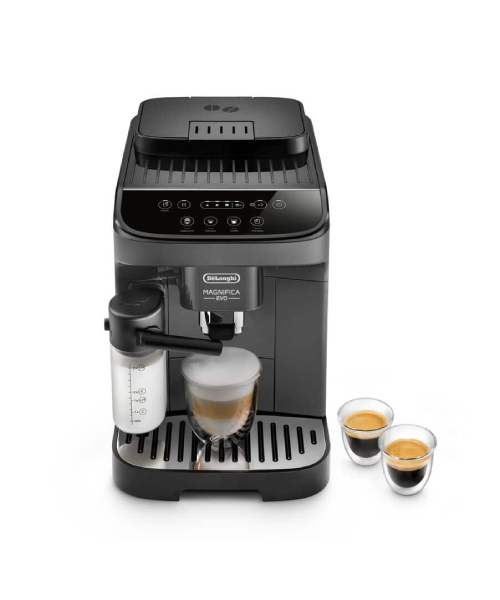
DeLonghi Magnifica Evo Bean-to-Cup
 Buy Now
The DeLonghi Magnifica Evo is the bean-to-cup machine that consistently earns the recommendation for households who want excellent coffee with minimal daily effort. The fully automatic grinding, dosing, tamping, and extraction process means the only actions required are filling the bean hopper, filling the water reservoir, and pressing a button. The coffee quality is genuinely good — the freshly ground beans extract differently from pre-ground pods and the difference is immediately perceptible in the aroma and cup quality.
- Price: £399–£499
- Available at: DeLonghi (delonghi.com), John Lewis, Currys, Amazon
- Best for: Daily coffee drinkers who want excellent coffee with minimal morning effort — the machine for those who want the result without the process
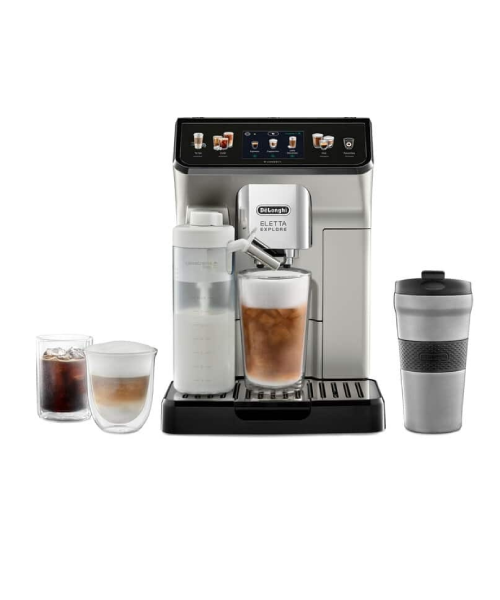
DeLonghi Eletta Explore Bean-to-Cup
 Buy Now
The Eletta Explore sits above the Magnifica Evo in DeLonghi's range and adds cold brew functionality to the standard bean-to-cup capability. The cold brew extraction produces coffee concentrate in approximately five minutes — significantly faster than traditional cold brew methods — that can be served over ice or used as the base for cold coffee drinks. For those who drink both hot and cold coffee, the Eletta Explore is the single machine that handles both without compromise.
- Price: £699–£799
- Available at: DeLonghi (delonghi.com), John Lewis, Currys
- Best for: Those who want both hot and cold coffee capability in a single machine — the premium bean-to-cup that extends the repertoire to cold coffee without a separate device
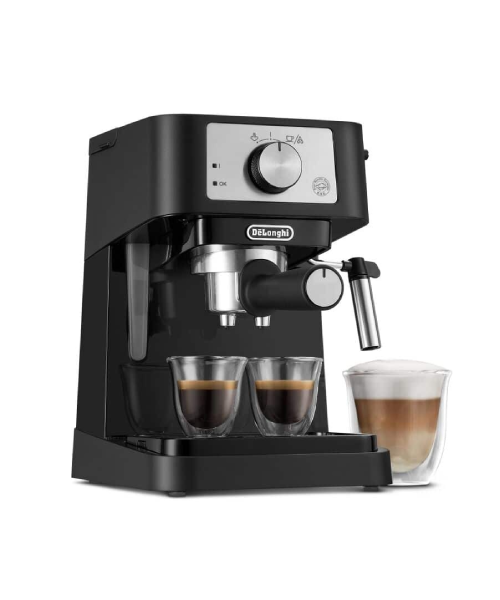
DeLonghi Stilosa Entry-Level Espresso
 Buy Now
The Stilosa is DeLonghi's entry point into manual espresso — the machine for those who want to discover whether home espresso works for them before committing to a more significant investment. The 15-bar pump and manual steam wand provide the core functions at a price that makes the experiment financially low-stakes. The build quality is appropriate for the price — plastic where the Dedica Arte uses metal — but the coffee quality from good beans and correct technique is genuinely adequate.
- Price: £79–£99
- Available at: DeLonghi (delonghi.com), Amazon, Currys, Argos
- Best for: Those who want to try home espresso without significant financial commitment — the starting point that leads to the Dedica Arte when the habit is confirmed
Bean-to-Cup vs Manual — The Decision That Matters Most
The most important coffee machine decision isn't which specific model to buy — it's understanding which type of machine suits the specific way the household actually uses coffee.
Bean-to-cup machines automate the grinding, dosing, tamping, and extraction process. They produce excellent espresso with minimal effort and are the correct choice for households where coffee quality matters but the preparation process is not the point. The trade-off is regular cleaning — the milk system, the brew group, and the descaling cycle are maintenance requirements that bean-to-cup machines add relative to simpler alternatives. Machines that aren't cleaned regularly perform progressively worse and develop mechanical problems. The cleaning isn't onerous — typically five to ten minutes per week and a descaling cycle every few months — but it requires consistency.
Manual espresso machines require ground coffee in a portafilter, correct tamping pressure, and attention to extraction time. They produce the best possible espresso when used well and frustrating results when the technique isn't right. The learning curve is real — expect two to four weeks of inconsistent results before the technique stabilizes. After that, manual espresso is a genuinely satisfying daily ritual for those who approach it that way. For those who just want good coffee quickly in the morning, the bean-to-cup is the right choice.
The Bean Question — Where the Real Investment Belongs
If there's one piece of coffee advice worth following above all others: buy better beans rather than a better machine. The freshness of coffee degrades immediately after roasting — the ideal drinking window for most coffee is three to thirty days from the roast date. Most supermarket coffee is months from the roast date before it reaches the shelf. The specific combination of freshly roasted beans from a quality roaster, used within their ideal window, produces coffee that tastes fundamentally different from the same equipment with stale supermarket beans.
Coffee subscription services from quality roasters deliver fresh-roasted beans within days of roasting, with the roast date printed on the bag. The difference this makes to the same machine is not subtle — it's the difference between coffee that's genuinely worth making at home and coffee that's merely economical compared to buying it out.
The investment hierarchy for home coffee: fresh beans first, then the grinder that preserves the bean quality through proper grinding, then the machine. In that sequence, even a modest machine with fresh beans and a quality burr grinder produces better results than an expensive machine with stale pre-ground supermarket coffee.
Cleaning — The Maintenance Reality
The most common cause of bean-to-cup machine failure and performance decline is insufficient cleaning, and the most common reason for insufficient cleaning is that the cleaning requirement wasn't understood at purchase.
The DeLonghi Magnifica Evo and similar bean-to-cup machines require: daily rinsing of the milk system after each milk use, weekly cleaning of the brew group (which removes from the machine for washing), and a full descale cycle every few months depending on water hardness. The machine prompts these with indicator lights. Following the prompts rather than dismissing them is the single maintenance habit that most extends machine life and maintains performance.
Hard water accelerates scale buildup significantly. In hard water areas — London, much of the south of England, much of the American Midwest — descaling more frequently than the machine prompts for is worth considering. Alternatively, using filtered water from an AquaTru or similar reduces scale buildup dramatically.
Conclusion
The coffee machine worth buying is the one matched to how coffee is actually consumed in the household — the bean-to-cup for those who want excellent coffee with minimal process, the manual for those who want the process as part of the ritual, and the entry-level for those still discovering which they are. DeLonghi produces the most consistently reliable machines across all three categories, with the Magnifica Evo as the bean-to-cup recommendation that earns the most consistent long-term satisfaction. Invest in the beans first, follow the cleaning routine consistently, and the machine will produce the coffee it's capable of producing for years.
Every product here was chosen by an editor from the public record — verified buyer reviews, independent testing and the brand’s own documentation — before any commercial conversation happened. If you buy through a link on this page we may earn a commission, at no cost to you, and it never decides what we recommend. Read the full policy.
Editorial Team
Every recommendation on Decor Imperial is researched by our editors from the public record — verified buyer reviews, independent testing, owner communities and the brand’s own documentation — before it appears here. We earn a commission when you buy through our links; no brand sees a review before it is published, and none has ever changed one.
Keep Reading
All stories Home & Decors
Reasn Review: Is This Size-Inclusive Fashion Brand Worth It?
Home & Decors
Home & Decors
Reasn Review: Is This Size-Inclusive Fashion Brand Worth It?
 Home & Decors
Nathan James Furniture Review: Great Customer Service, Mixed Quality
Home & Decors
Home & Decors
Nathan James Furniture Review: Great Customer Service, Mixed Quality
 Home & Decors
McGee & Co Review: A Catalogue That Coheres, and Furniture That Does Not Arrive
The Studio McGee catalogue is built so that everything in it sits together, and on décor and textiles the buyers agree. Large furniture is the problem: a $6,000 bed unshipped at six months.
Home & Decors
Home & Decors
McGee & Co Review: A Catalogue That Coheres, and Furniture That Does Not Arrive
The Studio McGee catalogue is built so that everything in it sits together, and on décor and textiles the buyers agree. Large furniture is the problem: a $6,000 bed unshipped at six months.