Bedroom Decor Ideas for a Calm and Cozy Space
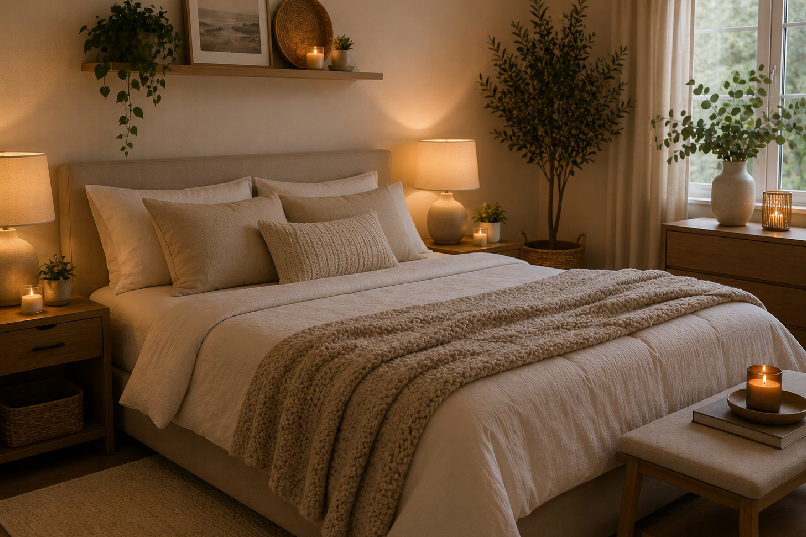
There's a version of a bedroom that most of us have had at some point — the one that you don't really want to go back to during the day, that you don't particularly enjoy being in, that feels like just where your bed lives rather than a place you actually want to spend time. It functions. It does what a bedroom technically needs to do. But there's nothing about it that makes you want to curl up in there on a Sunday morning with a book and a coffee.
Then there are the other kinds of bedrooms. The ones that feel like they're holding you. Where the light is right, the textures are soft, the colors are calm. Where you walk in after a long day and something in you actually relaxes.
The difference between those two rooms is almost never money. I've been in expensive bedrooms that felt cold and impersonal and modest bedrooms that felt like the best place in the world. It's about specific decisions around specific things. Warmth, texture, light, color. Here's how to think about them.
Color Does More Emotional Work Than People Give It Credit For
Walk into a room painted a warm white or a soft sage or a muted dusty blue and you feel something different than you do in a room painted bright yellow or deep red or stark cool white. This isn't subjective — well, it is, but there are some consistent patterns. Cool, bright colors raise alertness. Warm, muted, soft colors lower it. For a bedroom where the goal is calm and rest, that matters.
The colors that show up again and again in bedrooms that feel genuinely restful are the ones with a lot of grey or white mixed in. Not because grey and white are inherently calming — they can be cold and clinical — but because muting the saturation of a color takes the edge off it. A dusty pink feels different from a bright pink. A sage green feels different from a lime green. A warm navy feels different from an electric blue. The muted versions are quieter. They let the room breathe rather than making a statement.
If you're not sure where to start, warm whites and off-whites are almost impossible to get wrong in a bedroom. Something with a slightly yellow or pink undertone rather than a blue undertone. These colors work in every light condition, they make the room feel clean without being clinical, and they'll never be the thing you want to change.
One practical note — test any color in your actual room with an actual sample before committing. This matters most for bedrooms because the light conditions change more dramatically between morning and evening in a sleeping space than in any other room. A color that looks perfect at midday can feel completely wrong at 10pm under a lamp.
Textiles Are What Make a Room Feel Soft
You can change the wall color, buy new furniture, hang new art — and a room can still feel hard. Hard in the sense of nothing to visually land on, nothing soft to draw you in, nothing that makes you want to touch it.

Textiles solve this. Not just in the practical sense that they're soft when you touch them — in the visual sense that the eye reads them as soft and warm even from a distance.
The duvet and pillowcases are the biggest textile surface in most bedrooms and the starting point. Linen bedding is the material that most consistently achieves the calm-and-cozy feeling people are after — it has a slightly rumpled, lived-in quality that looks relaxed without looking messy, and it gets softer with every wash rather than degrading the way cotton-polyester blends do. It's not the cheapest option but it's durable enough that it's good value over time.
Beyond the bed, a throw is the simplest addition to a bedroom that makes it feel more finished and more cozy. Folded at the foot of the bed or draped loosely over a chair in the corner, a chunky knit or a soft wool throw adds texture and warmth and makes the room look less like a bedroom from a catalogue and more like a room someone actually lives in.
Curtains count too — and this is one people don't think about enough. Curtains that are the right length (floor to ceiling, always), made from a fabric with some weight to it, hung so that they frame the window rather than just covering it. They make a bedroom feel finished in a way that nothing else quite does. Short curtains or thin synthetic curtains that don't drape properly are one of the things that most reliably make a bedroom feel unfinished regardless of what else is going on in there.
The Light Situation Is Non-Negotiable
A calm cozy bedroom cannot coexist with a single harsh overhead light. It just can't. I don't know how else to say this.
Overhead light is fine for seeing clearly when you need to — when you're getting dressed, when you're looking for something. But it is not the light you want in a room when you're trying to wind down, rest, or just be somewhere comfortable. It comes from above, it flattens everything, and it is physically the opposite of cozy.
The remedy is not complicated. Get a lamp on the nightstand. One on each side if there are two sides to the bed. Warm bulbs — the amber-warm kind, 2700K, not the bright white kind. Make these your default evening light rather than the overhead. The room will feel completely different.
If you want to go further, a floor lamp in a corner gives you a third source of light that makes the room feel layered and warm rather than uniformly lit. A lamp on a dresser or desk. String lights along the headboard wall or behind the bed frame. Each additional warm light source at a lower level makes the room feel more like a sanctuary and less like a lit room.
Candles deserve a mention too. Even one lit candle changes the quality of light in a room in a way that electric sources don't replicate. The flicker, the warmth, the very slightly different quality of the light. It's small and it's significant.
Clearing Space to Create Calm
Calm is not just a feeling — it's a visual state. A bedroom with a lot of visual noise in it does not feel calm no matter what colors you use or how good the lighting is. The eye needs places to rest.
This means being deliberate about what's on surfaces. A nightstand with a lamp, a glass, and a book on it looks considered. A nightstand with a lamp, a glass, a book, a pile of receipts, a charger, two empty mugs, a lip balm, a hair tie, and three things you don't know what to do with looks like anxiety given physical form.
It doesn't have to be empty. It just has to be chosen. Everything that's sitting out should be there because you want it there, not because it ended up there and never got moved.
The same goes for the floor. Visible floor — actual empty floor space — makes a room feel larger and calmer. Clothes on the floor, bags on the floor, boxes on the floor — they all eat the sense of space and they all add visual noise that works against any decorating you're trying to do.
Get one good basket or hamper for clothes that aren't clean but aren't quite ready for the wash. Keep it in the wardrobe if possible. It sounds small and it matters more than most decorating decisions.
Small Things That Add Up
A plant somewhere in the room. Not a complicated plant that needs constant attention — a snake plant, a pothos, a peace lily. Something living. It changes the quality of the air in a small way and changes the quality of the room in a larger way. There's a reason rooms with plants feel warmer than rooms without them. Some things you don't need to fully understand to take advantage of.

A plant somewhere in the room. Not a complicated plant that needs constant attention — a snake plant, a pothos, a peace lily. Something living. It changes the quality of the air in a small way and changes the quality of the room in a larger way. There's a reason rooms with plants feel warmer than rooms without them. Some things you don't need to fully understand to take advantage of.
Keeping the bedroom for sleep and rest as much as possible. This one's more of a habit than a decor decision, but it shapes how the room feels. A bedroom that's also where you work, where you watch TV, where you do everything — that bedroom has an energy that fights against rest. The more you can keep it as the place for winding down, the more it starts to feel like that place rather than an extension of the rest of the house.
What Calm Actually Feels Like
A calm bedroom is quiet in some way that goes beyond sound. The colors don't demand attention. The light doesn't intrude. The textures invite touch. There's enough in the room to feel human and personal but not so much that it feels cluttered.
You'll know you've got it right when you walk in and something in you settles. That's the actual goal — not any particular aesthetic, not any particular color palette, not any particular furniture arrangement. Just that settling.
Everything in this guide is in service of that one feeling. Work backwards from it and the decisions get easier.
Every product here was chosen by an editor from the public record — verified buyer reviews, independent testing and the brand’s own documentation — before any commercial conversation happened. If you buy through a link on this page we may earn a commission, at no cost to you, and it never decides what we recommend. Read the full policy.
Editorial Team
Every recommendation on Decor Imperial is researched by our editors from the public record — verified buyer reviews, independent testing, owner communities and the brand’s own documentation — before it appears here. We earn a commission when you buy through our links; no brand sees a review before it is published, and none has ever changed one.
Keep Reading
All stories Home & Garden
Wondercide Review: The Plant-Based Pest Control Brand With Genuine Science Behind It
Peer-reviewed work found the cedar oil as lethal to nymph ticks as permethrin and as repellent as DEET. The complaint that has nothing to do with the spray: a privacy policy that collects more than it needs.
Home & Garden
Home & Garden
Wondercide Review: The Plant-Based Pest Control Brand With Genuine Science Behind It
Peer-reviewed work found the cedar oil as lethal to nymph ticks as permethrin and as repellent as DEET. The complaint that has nothing to do with the spray: a privacy policy that collects more than it needs.
 Home & Garden
Solo Stove Review: Practically Indestructible, and Not a Heat Source
A dozen products in, Family Handyman's long-term tester calls these practically indestructible. Understand what you are buying: the airflow that kills the smoke sends the heat up, not at you.
Home & Garden
Home & Garden
Solo Stove Review: Practically Indestructible, and Not a Heat Source
A dozen products in, Family Handyman's long-term tester calls these practically indestructible. Understand what you are buying: the airflow that kills the smoke sends the heat up, not at you.
 Home & Garden
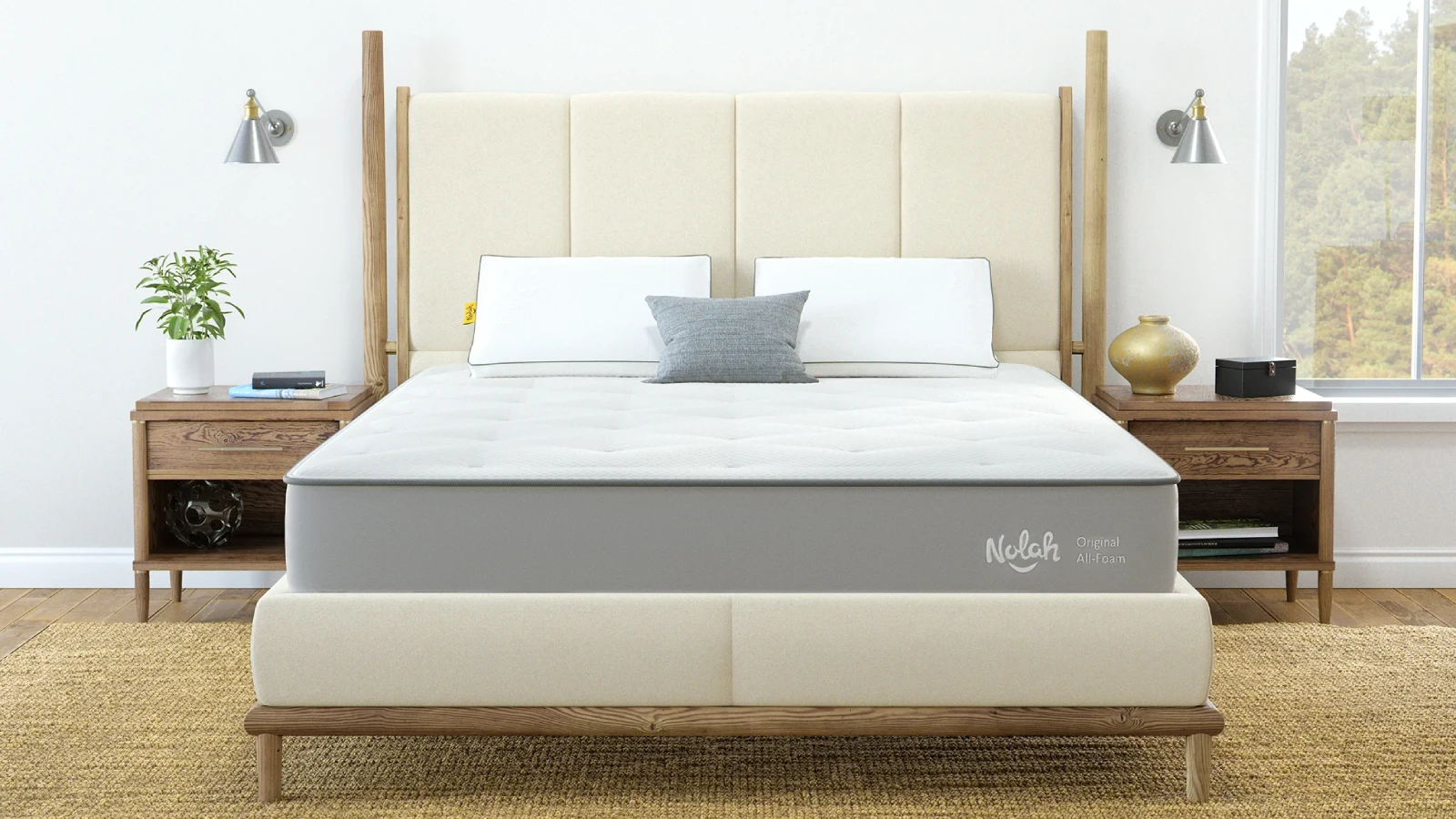
Nolah Mattress Review: The Sleep Technology Company That Consistently Earns 9/10+ in Independent Testing
AARP scored three Nolah models nine out of ten or better, which almost never happens across a whole line-up. One caveat for anyone reading older reviews: the Original Hybrid went in May 2025.
Home & Garden
Home & Garden
Nolah Mattress Review: The Sleep Technology Company That Consistently Earns 9/10+ in Independent Testing
AARP scored three Nolah models nine out of ten or better, which almost never happens across a whole line-up. One caveat for anyone reading older reviews: the Original Hybrid went in May 2025.