
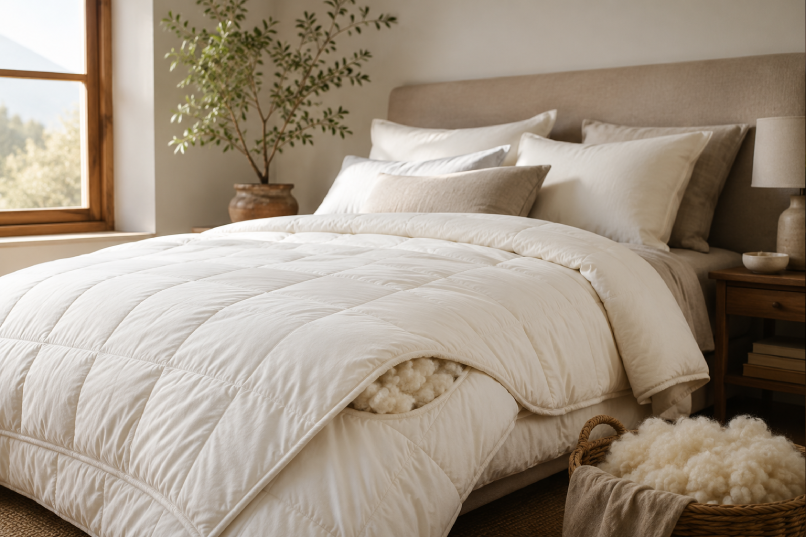
The duvet is the component of the sleep environment that most people replace least thoughtfully and least frequently. It’s bought when a duvet is needed, chosen on tog rating and price, and replaced when it becomes visually or hygienically inadequate. The specific question of whether the duvet’s fill material is contributing to or limiting sleep quality is rarely asked.
It’s worth asking. The fill material determines the temperature environment at the sleep surface — which is the primary variable in whether warm sleepers wake in the early hours, whether night sweats produce the clammy discomfort that disrupts sleep, and whether the duvet manages changing body temperature through the night or simply maintains a fixed warmth level regardless of what the body is doing.
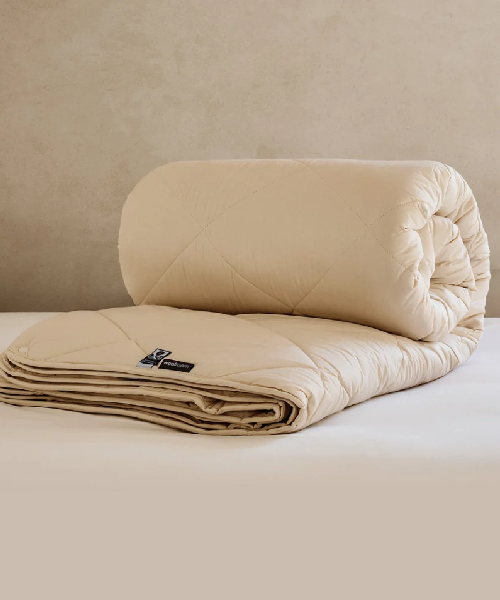
The 9 tog Deluxe is the transitional season duvet that most people use most of the year in the UK and similar temperate climates — warm enough for cool autumn and spring nights, light enough for milder winter nights without overheating. The British Woolmark-certified wool fill in a cotton percale cover produces the temperature regulation that wool’s fibre structure provides: moisture absorption that prevents clammy warmth accumulation, air pocket insulation that provides warmth without heat trapping, and a fill material that responds to body temperature rather than maintaining a fixed warmth level.
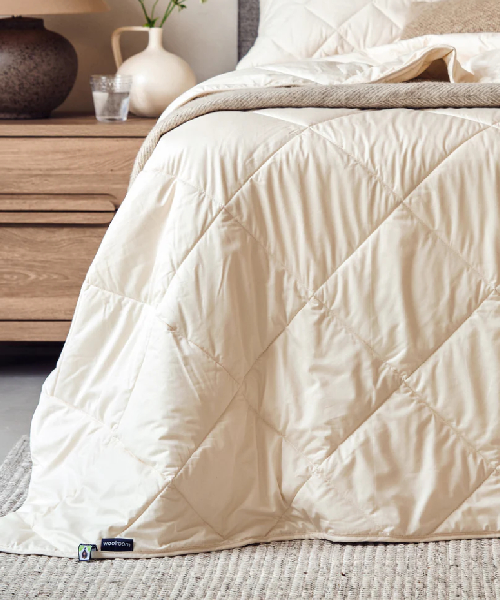
The 4.5 tog summer wool duvet combined with the 9 tog to create a 13.5 tog winter weight — the complete year-round wool bedding solution in a single purchase. The all-seasons system is more economical than buying each weight separately and more practical than maintaining a seasonal storage and swap routine, since the two duvets button together and separate with the same action. For most households, the all-seasons combination is the most practical wool bedding investment.
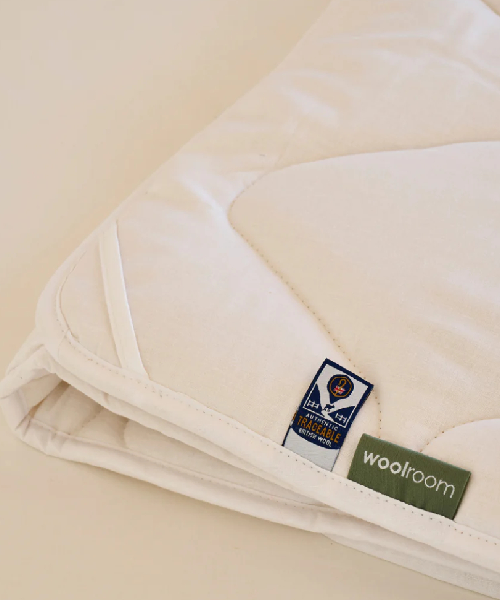
The Wool Room’s organic wool range uses wool certified to the Global Organic Textile Standard (GOTS) — the third-party verification that the wool was produced without synthetic pesticides or fertilizers and processed without harmful chemicals. For those for whom the organic certification is meaningful, the GOTS standard is genuine and audited rather than claimed. The performance is comparable to the Deluxe range with the addition of the certification’s environmental and welfare credentials.
The question of whether wool bedding is genuinely different from synthetic bedding — or whether it’s primarily a premium material story without proportionate performance difference — is worth addressing directly.
Temperature regulation: genuinely different. The specific fibre properties that allow wool to absorb up to 30% of its weight in moisture before feeling damp, and to release that moisture as temperature changes, produce a sleep surface that responds to the body rather than maintaining a fixed environment. Synthetic polyester fill doesn’t have this property — it insulates but doesn’t regulate. The difference is most dramatic for warm sleepers and those who experience night sweats; less dramatic for cool sleepers in cool environments where the temperature regulation mechanism is less active.
Longevity: genuinely different. Wool bedding with appropriate care lasts fifteen to twenty years. Synthetic fill loses loft and insulating properties within three to five years of regular use. The cost-per-year comparison consistently favors wool over this time horizon even at wool’s higher purchase price.
Comfort against skin: variable. This is where the wool grade matters significantly. The Wool Room’s British wool and Duckworth’s Rambouillet wool are both fine enough to be comfortable against skin without the scratchiness associated with coarser wool grades. The cotton percale cover on The Wool Room’s duvet means the wool itself doesn’t contact skin directly.
Environmental credentials: genuinely better for wool when sourced responsibly. Natural fiber that biodegrades, from animals managed on pasture, has a different environmental profile from polyester fill derived from petroleum. The GOTS certification and the Woolmark standard both provide verification frameworks.
Air regularly. Taking the duvet outside on dry days and allowing it to air in fresh air is the primary maintenance that wool bedding requires — it refreshes the fill and maintains the loft more effectively than any other intervention.
Wash infrequently. The natural lanolin in wool has antimicrobial properties that mean wool bedding doesn’t require washing as frequently as synthetic alternatives. Once every one to two years following the manufacturer’s specific instructions is appropriate for most households.
When washing, follow the specific instructions. Cool water, gentle cycle, tumble dry on low (wool can tumble dry on low heat unlike most natural fiber clothing), and ensure completely dry before using — damp wool that’s stored or used can develop mildew.
Store properly when not in use. Cotton or linen storage bag (breathable fabric, not plastic), clean and completely dry, with cedar blocks or lavender to deter moths. Not in a plastic bag, which traps moisture and can cause mildew.
Wool bedding from The Wool Room and Duckworth is the bedding investment with the most direct impact on sleep quality for warm sleepers and those who experience night sweats — the population for whom temperature is the primary sleep variable. The performance difference from synthetic alternatives is genuine and most significant for this population. The longevity difference makes the higher upfront cost more economical over the product’s life. And the environmental credentials of responsibly sourced natural fiber are meaningfully better than synthetic alternatives. The all-seasons combination from The Wool Room is the most practical single purchase for year-round wool bedding. Duckworth is the specific recommendation for American buyers and for those whose texture concerns about wool have prevented previous natural fiber bedding consideration.