
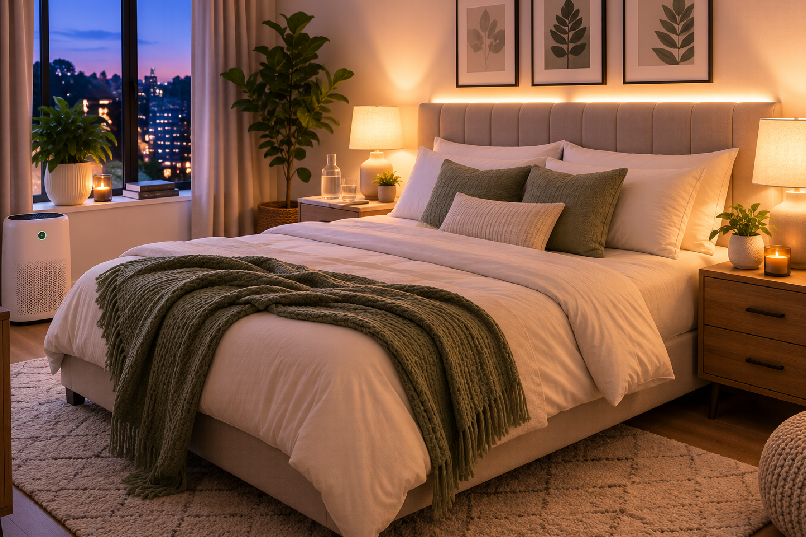
The sleep environment is the collection of conditions in the bedroom that either support or undermine the body’s natural sleep processes. Most people inherit their sleep environment — the bedroom as it was when they moved in, with the furniture that was available, the curtains that came with the room, the lighting that was installed. The specific optimization of those conditions for sleep quality is less common and more impactful than most people realize.
The body’s sleep onset process requires specific environmental conditions: falling light levels that trigger melatonin production, falling core body temperature that marks the transition from wakefulness to sleep, and absence of sound disturbances that would activate threat-detection responses and prevent deep sleep. The bedroom that provides all three consistently produces better sleep than one that provides them inconsistently or not at all. The changes required to provide them are usually simpler and less expensive than the marketing around sleep products implies.
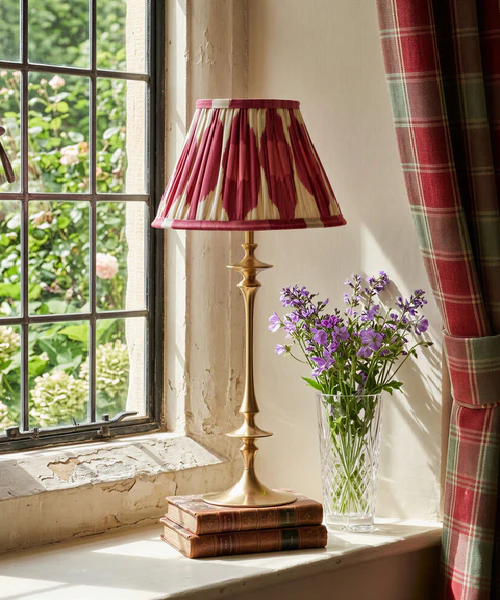
The bedside lamp with a dimmable warm-white bulb (2700K) is the most cost-effective change available for the sleep environment. The specific mechanism: warm-spectrum light in the 2700K range doesn’t suppress melatonin production to the degree that cool-spectrum light (4000K+) does. Dimming the warm-spectrum light in the hour before bed further reduces the melatonin-suppressing effect and signals to the body that the light environment is transitioning toward sleep. A Pooky bedside lamp on a dimmer switch, used in place of overhead lighting from an hour before the intended sleep time, addresses the light variable at the cost of the lamp plus a dimmer switch.
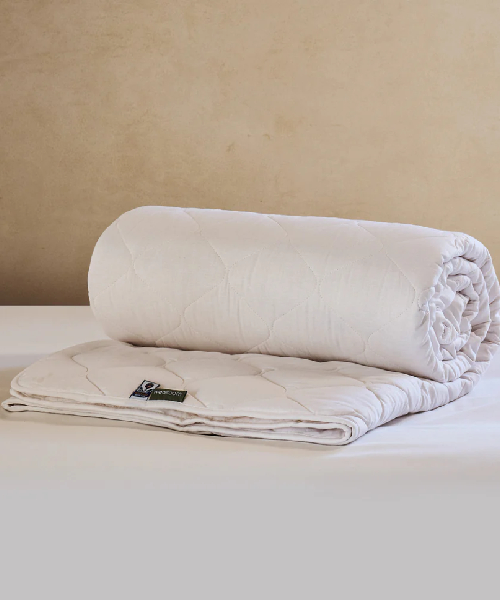
The temperature environment at the sleep surface is the variable most consistently responsible for early-morning waking — the period between 3am and 5am when the body’s core temperature would naturally be lowest and the sleep surface has accumulated heat from hours of insulation. The Wool Room duvet’s temperature regulation addresses this by managing moisture and heat at the sleep surface rather than maintaining a fixed warmth level regardless of body temperature.
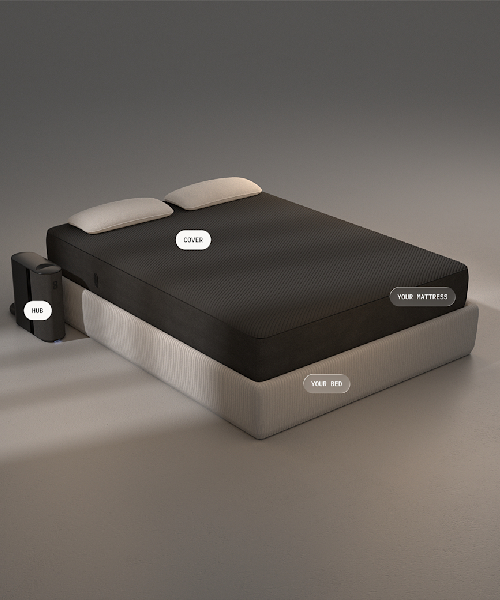
For those whose temperature regulation problem persists with the Wool Room duvet, or whose specific sleep temperature preferences require more precise control than passive materials provide, the Eight Sleep Pod’s active temperature management addresses the same variable with technology rather than material properties. The Pod cools or heats the sleep surface to the precise temperature that produces optimal sleep for each sleep stage — which is the most direct intervention available for the temperature environment.
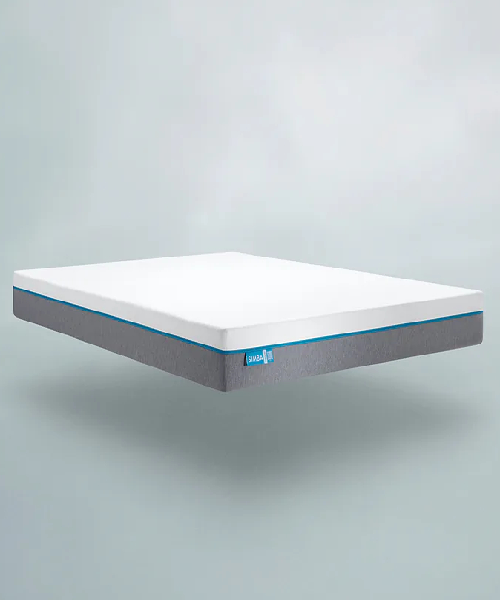
The mattress is the foundation of the sleep environment and the product that most determines whether everything else in the environment can function as intended. A mattress that doesn’t provide appropriate support creates the compensatory muscle tension that prevents deep sleep regardless of how optimal the light, temperature, and sound environments are. The Simba Hybrid’s hybrid construction addresses support and temperature simultaneously.
The research on sleep environment identifies four primary variables that affect sleep quality in most people:
Light. The amount and spectrum of light in the bedroom during the transition to sleep and during sleep itself. The intervention: blackout curtains or a quality sleep mask for during sleep, warm-spectrum dimmable lighting for the pre-sleep period.
Temperature. The ambient room temperature and the sleep surface temperature. The intervention: 16–19°C ambient room temperature for most adults, appropriate bedding tog rating for the season and individual temperature preference, wool bedding for those who run warm.
Sound. Consistent sounds are less disruptive than variable sounds — the constant hum of an air conditioner is less disruptive than intermittent traffic because the brain processes consistent sound as background rather than as a threat signal. The intervention: white or brown noise from a machine or app for environments with variable sound intrusion, earplugs for consistent high-level noise.
Darkness associations. The bedroom’s association with sleep versus wakefulness — the room that’s used exclusively for sleep and rest produces stronger sleep associations than the room also used for work, television, and other wakeful activities. The intervention: removing work materials, television, and other wakeful activity associations from the bedroom environment.
The sleep environment variable worth addressing first is the one most evidently failing — but if none is obviously failing, the priority sequence that produces the most consistent improvement for most people:
First: light. The overhead light on full power until the moment of sleep onset is the most consistent sleep environment failure in most bedrooms, and it costs virtually nothing to fix. Turn the overhead off, use a warm-spectrum lamp on a dimmer, and assess the sleep onset improvement over two weeks.
Second: temperature. If the light intervention produces improvement but early-morning waking persists, the temperature variable is the next priority. Assess the duvet first — is it the right tog for the season and for the individual temperature preference? Wool bedding trial for those who run warm.
Third: sound. If light and temperature are addressed and sleep disturbance continues, the sound environment assessment is next. Is there variable sound intrusion that the brain processes as threat? White noise testing is free and immediate — a phone app for two weeks costs nothing.
Fourth: associations. If all three environmental variables are addressed and sleep quality remains poor, the bedroom’s use associations are the next assessment. Are there activities in this room that create wakefulness associations? Removing them is a behavioral rather than a product change but it affects sleep quality in the same way.
The sleep environment worth creating is one where the light, temperature, sound, and association variables are all aligned with the body’s natural sleep processes rather than working against them. Pooky’s dimmable bedside lamp addresses the light variable at the most accessible cost. The Wool Room duvet addresses the temperature variable through natural material properties. Eight Sleep addresses it through technology for those who need more precision. And Simba provides the mattress foundation that all other sleep environment variables build on. The priority is identifying which variable is most limiting and addressing that specifically — the sleep environment improvement that comes from one well-chosen change consistently produces better results than multiple undirected purchases.