
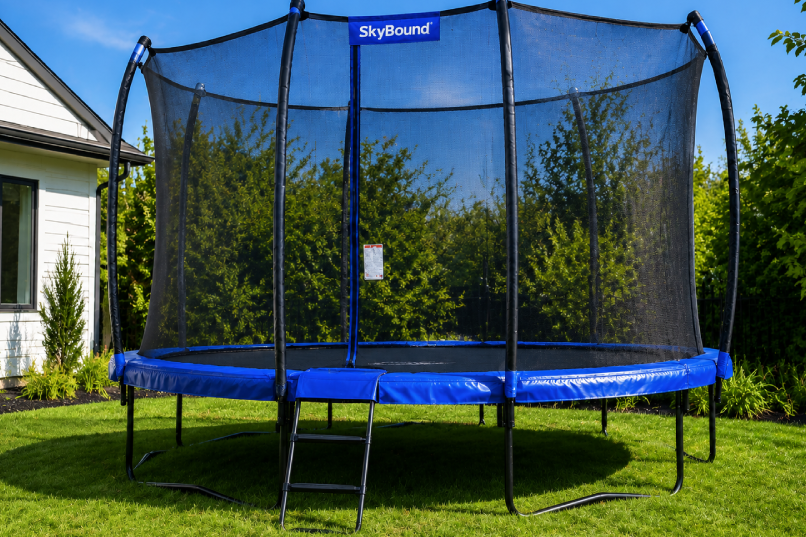
The garden trampoline market has a specific quality problem that SkyBound exists to solve: the trampoline that looks adequate at purchase and reveals its construction compromises through the first two years of actual family use. The thin-gauge frame that develops stress marks at the weld points. The enclosure net that loses its tension after one winter. The springs that develop uneven bounce as some maintain tension and others don’t. These are the outcomes of the specific material and construction compromises that cheaper trampolines make, and they’re predictable rather than random failures.
SkyBound designs with these failure modes in mind and engineers against them. Whether that engineering is worth the price premium over alternatives like Zupapa — which is genuinely good for the price — is the honest question this review addresses.
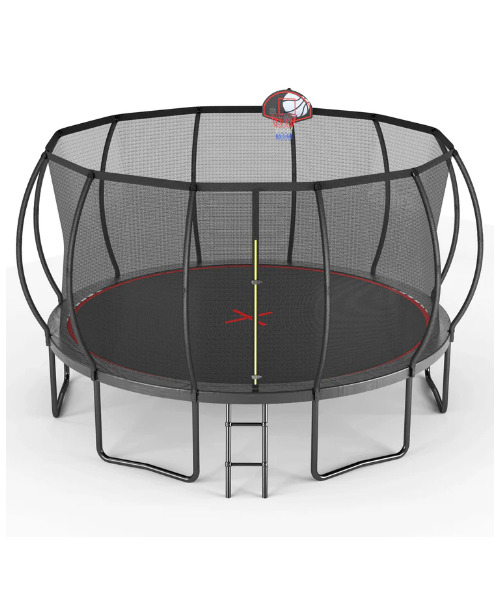
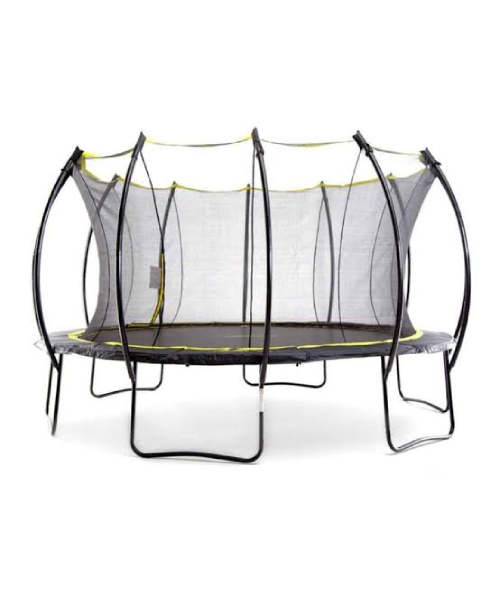
The Stratos is SkyBound’s flagship model and the one that earns the most consistent long-term positive feedback. Two to three years of ownership data from family users consistently reports: the frame shows no stress marks or warping, the Snap-Together pole connections remain secure, the enclosure net maintains appropriate tension, and the mat retains its bounce quality without the progressive sagging that cheaper alternatives develop. This is what good trampoline engineering produces and what the SkyBound premium is paying for.
The specific construction details that produce this: the galvanised steel tubing (not just powder-coated over standard steel, but galvanised — the process that provides rust protection that survives coating chips), the Snap-Together pole connections (the welded-ring and collar system rather than the sleeve connections that allow movement over time and produce the specific wobble that signals enclosure deterioration), and the UV-stabilised mat and net (verified stabilisation rather than marketing language, which matters for outdoor material longevity).
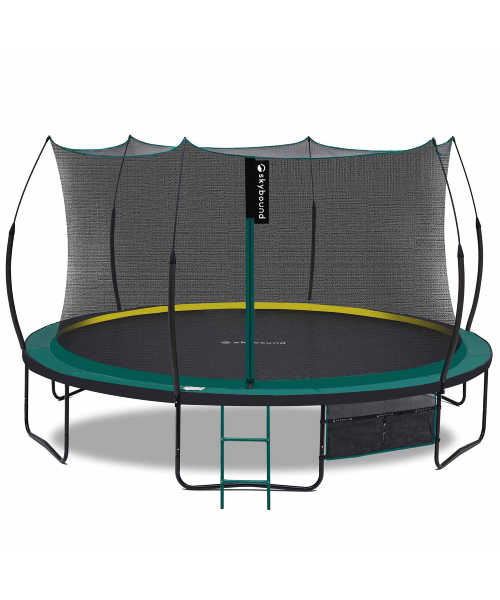
The Orion is SkyBound’s springless model — the rod-based design that eliminates the spring system entirely, removing the hard metal spring zone from the jumping area and using fiberglass rods beneath the mat to provide the bounce. The safety argument: the spring zone is the specific injury risk in traditional trampolines that causes the contact injuries when jumpers land off-center and make contact with the spring-covered frame area. Springless designs eliminate this injury mode entirely.
The trade-off: springless trampolines have a different bounce character than spring trampolines — slightly more predictable in its trajectory and slightly softer in its maximum height — which some children prefer and some find less exciting than the traditional spring bounce.
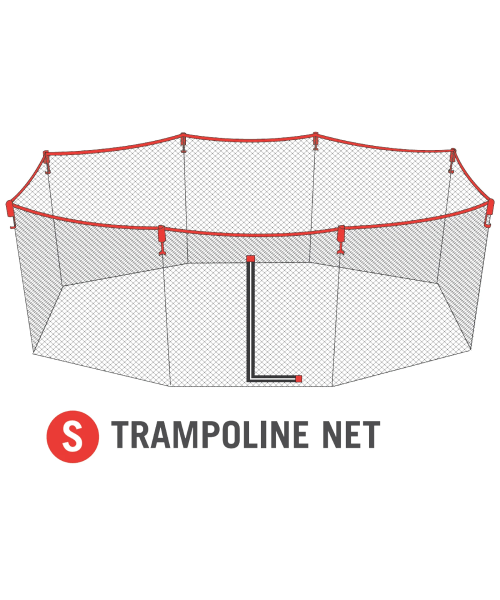
SkyBound produces accessories specifically engineered for their frame dimensions — the basketball hoop that clips to the Stratos enclosure poles at the correct height, the sprinkler attachment that connects to a standard garden hose and mounts to the mat frame for summer water play, and the anchor kit for areas with significant wind. The accessories are worth knowing about at purchase because SkyBound’s frame dimensions mean aftermarket accessories designed for other trampolines may not fit correctly.
SkyBound provides the following warranty coverage: frame (lifetime), springs (one year), enclosure poles (five years), mat and pads (two years), enclosure net (one year). The warranty structure itself tells you which components SkyBound expects to perform for the long term (frame) and which are the wear components that have a more defined useful life. The one-year spring warranty is honest — springs are a wear component even in quality trampolines and the expected lifespan with heavy family use is two to four years before replacement is worth considering for optimal bounce.
The comparison that most buyers are making when considering SkyBound is against Zupapa, which is the value trampoline recommendation that genuinely delivers above its price tier. The honest comparison:
Where SkyBound is clearly better: the galvanised frame steel versus Zupapa’s powder-coated steel — this difference is most visible after two to three seasons of outdoor weathering. The Snap-Together enclosure pole connections versus Zupapa’s standard sleeve connections — this difference is most visible over time as connections experience the stress of children bouncing against the enclosure.
Where Zupapa matches or approaches SkyBound: the UV-stabilised mat (Zupapa’s 10-year mat warranty reflects genuine confidence here), the dual-layer enclosure net (this is a genuine quality feature that Zupapa includes), and the overall bounce quality which is comparable between the brands.
The price difference: typically $100–$200 depending on size. Whether that difference is worth the specific construction advantages is a family-specific calculation that depends on how heavily the trampoline will be used, how long you plan to keep it, and how much the specific failure modes SkyBound addresses (frame rust, connection loosening over time) concern you for your specific conditions.
For most families: the Zupapa is the right choice if budget is any consideration. The SkyBound is the right choice if long-term durability in heavy use is the primary concern and the premium is genuinely manageable.
SkyBound is the trampoline worth buying for families who want construction quality that prevents the specific failure modes that cheaper trampolines develop over time — frame rust, enclosure connection loosening, mat degradation. The Stratos is the specific recommendation in the range, with the galvanised steel, Snap-Together connections, and UV-stabilised materials that justify the premium over Zupapa for families where maximum durability is the primary requirement. The springless Orion is the alternative for families whose primary safety concern is the spring contact injury mode rather than general construction quality. And the accessory range extends the trampoline’s seasonal and activity range in format-specific designs that fit the SkyBound frame correctly. For families where the Zupapa’s slightly lower quality ceiling is an acceptable trade for its lower price, the Zupapa remains a genuine recommendation. The SkyBound is the premium for those who specifically want the extra construction margin.