
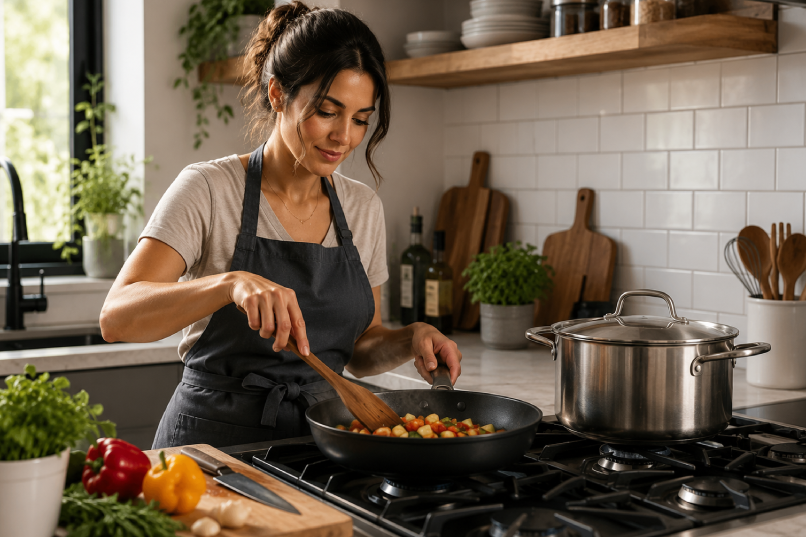
The cookware market has a specific credibility problem. Marketing has become so sophisticated in this category that beautiful photography, compelling brand stories, and influencer enthusiasm have created a generation of cookware buyers who own impressive-looking pans that perform inconsistently, degrade quickly, and end up being used less than the cheap pan that’s been in the kitchen for a decade.
The cookware worth buying is distinguished not by how it looks in a flat lay but by how it performs across the cooking situations it’s used for most frequently — and then how it continues to perform six months, a year, and two years later. The nonstick coating that releases food beautifully in the first month and starts to stick by month three. The stainless pan that’s described as easy care and requires technique that most people haven’t developed. The cast iron that’s a lifetime investment when treated correctly and a frustrating maintenance obligation when not.
What follows is the honest evaluation of the cookware worth owning based on how it actually performs across the full arc of real kitchen use.
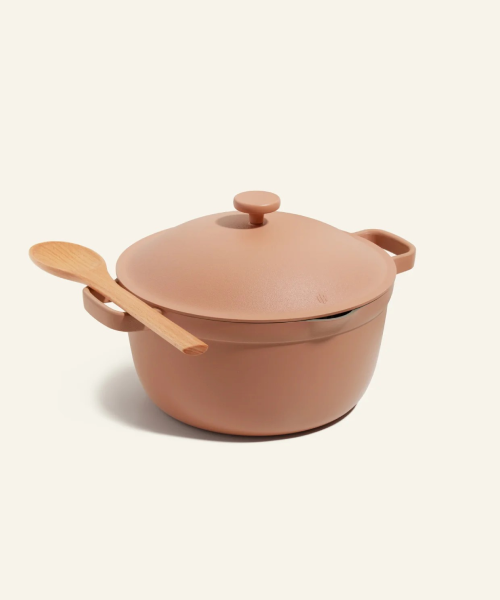
Our Place’s Perfect Pot applies the same integrated design thinking as the Always Pan to a larger Dutch oven format. The ceramic interior, the steamer basket, the lid that functions as a colander, the integrated spoon rest — these are the thoughtful details that distinguish a product designed by people who actually cook from one designed to look good in product photography. The Perfect Pot is genuinely large enough for pasta, soups, braises, and batch cooking while being beautiful enough to go from stove to table.
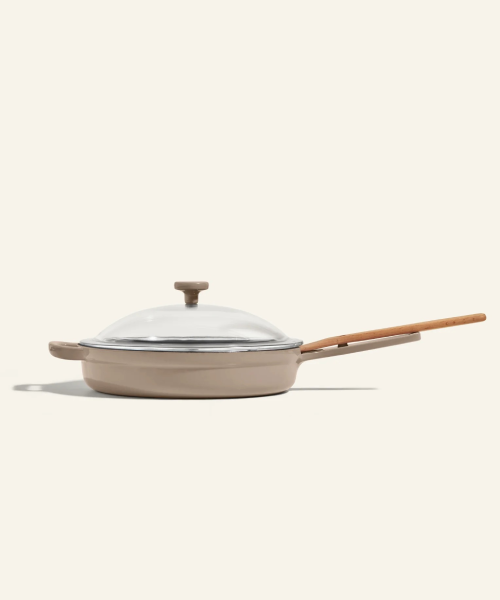
Our Place’s cast iron version of the Always Pan is the piece for those who want the lifetime durability and superior heat retention of cast iron in the Always Pan format. Cast iron builds a natural seasoning through use that makes it genuinely nonstick without any applied coating — the nonstick that improves rather than degrades over time. The Always Pan cast iron carries the same integrated spatula rest and lid design in a heavier, more durable material that becomes an heirloom piece with basic care.
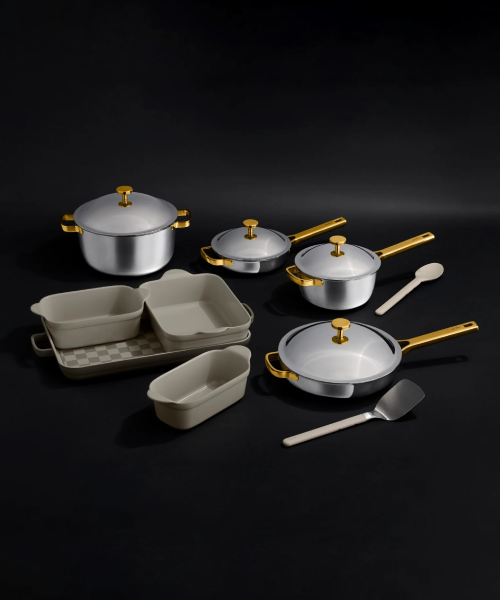
The Steam & Strain is the Our Place piece that addresses the specific gap in most kitchen setups — the pasta cooking situation that requires a colander, a large pot, and significant counter space management for the transfer. The integrated straining lid means the pasta is drained without any of this, which is the kind of small daily friction elimination that makes a product genuinely useful rather than just clever-sounding.
The cookware marketing environment has created widespread confusion between what cookware looks like and what it does. The before-and-after photos of beautiful food made in beautiful pans imply that the pan is responsible for the food quality when, in reality, ingredient quality and cooking technique determine outcomes far more than the pan. The best pan in the world produces mediocre food from poor ingredients or incorrect technique. The adequate pan produces excellent food from quality ingredients and correct approach.
This doesn’t mean pan quality doesn’t matter — it does, in specific ways. Heat distribution affects whether food cooks evenly or develops hot spots. Nonstick coating quality affects how long the pan remains genuinely nonstick. Material weight affects heat retention through the cook. But these are supporting variables rather than primary variables, and the cookware marketing that implies otherwise is serving the marketing rather than the cook.
The Our Place pieces are worth recommending specifically because the design thinking is genuinely about cooking rather than about appearing to be about cooking. The integrated spatula rest is a small detail that solves the specific problem of where to put the spatula between uses without dirtying the counter. The straining lid solves the pasta drainage problem. The steam tray allows steaming in the same pan without additional equipment. These are the functional details that make a daily cooking experience better rather than the marketing details that make a product photograph better.
Ceramic nonstick is marketed as the clean alternative to traditional PTFE (Teflon) nonstick and it is genuinely different in important ways. The ceramic coating doesn’t contain the PFAS compounds that have raised health and environmental questions about traditional nonstick. It can tolerate higher oven temperatures than PTFE. And it looks significantly better — the matte, stone-like ceramic surface is more aesthetically interesting than the black or grey of traditional nonstick.
The honest limitation: ceramic nonstick degrades with heat and with abrasion in ways that require consistent care to slow. The degradation isn’t dangerous the way PTFE scratching can be — the ceramic doesn’t release harmful particles as it wears — but it does reduce the nonstick performance over time. The care requirements that significantly extend ceramic nonstick life: medium heat maximum (high heat is the primary ceramic coating degrader), no metal utensils, no cooking spray (which builds up on ceramic and accelerates degradation), and hand washing rather than dishwasher.
Our Place’s Always Pan 2.0 has improved the ceramic longevity over the original through a reformulated coating, but the care requirements remain — and following them is the difference between a ceramic pan that performs well for two to three years and one that starts to stick by month eight.
The Our Place marketing around the Always Pan emphasizes the “one pan for everything” proposition, and it’s more accurate than most such claims. The Always Pan genuinely replaces a frying pan, a small saucepan, and a sauté pan in the cooking situations it covers. For a small kitchen or someone starting a kitchen from scratch, the Always Pan plus the Perfect Pot covers the vast majority of cooking situations without any further investment.
The situations where additional pans are specifically needed: high-heat searing of proteins (where the Always Pan’s medium-heat limitation is a genuine constraint and cast iron or stainless is needed), large-volume frying that requires a bigger surface than the 10-inch format, and specialized cooking like wok work or specific baking applications. For everyday cooking of vegetables, eggs, sauces, sautéed proteins, soups, and pasta — which is what most home kitchens are doing most of the time — the Always Pan and Perfect Pot are a complete setup.
The cookware worth buying in 2026 is the cookware that solves the specific friction points of everyday home cooking rather than the cookware that photographs best. Our Place has earned their reputation by building genuinely useful products — the Always Pan 2.0’s versatility and integrated design, the Perfect Pot’s complete cooking vessel function, the cast iron Always Pan’s lifetime durability, and the Steam & Strain’s daily friction elimination. Care for the ceramic correctly, use the right heat levels, and these pans perform the way they’re supposed to for the years they’re supposed to.